Pleasant Run Nursery Plant Catalog

Botanical Name     Common Name
A B C D E F-G H I J-L M-O P Q R S T U-Z ALL

Jasminum nudiflorum

Winter Jasmine
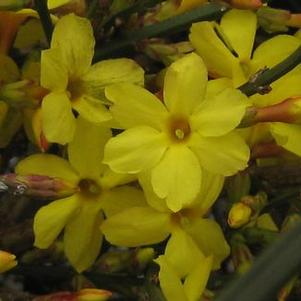
Jasminum nudiflorum has soft yellow flowers appearing in February through March over shiny green leaves. The green stems in Winter add a note of interest, and are excellent for trailing over rock walls.
Jasminum nudiflorum

Jasminum nudiflorum- See Woody Groundcovers

Jasminum nudiflorum-   See Woody Groundcovers

Juniperus chinensis Gold Star® ('Bakaurea')

Juniper
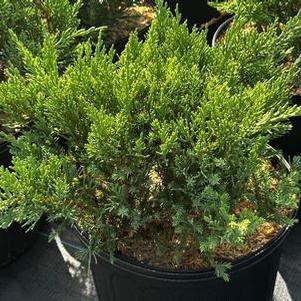
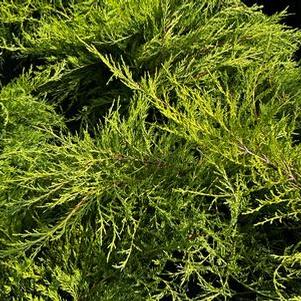
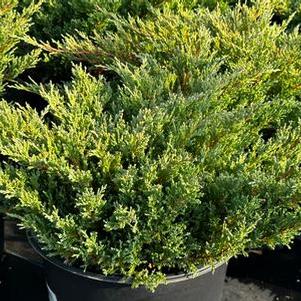
Juniperus chinensis Gold Star® has blue-green evergreen foliage which is accented by the bright yellow tips of its terminals. Low maintenance, salt and dry site tolerant.
Juniperus chinensis Gold Star® ('Bakaurea')

Juniperus chinensis var. sargentii

Juniper - Sargent's Juniper
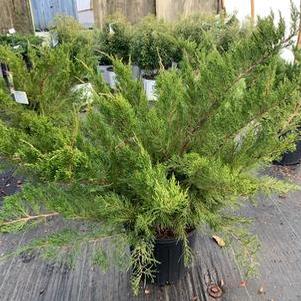
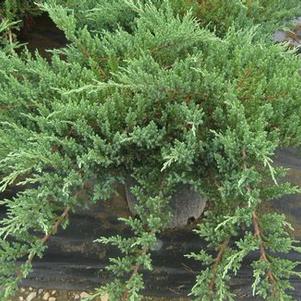
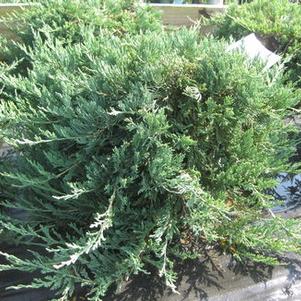
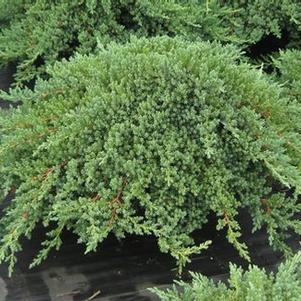
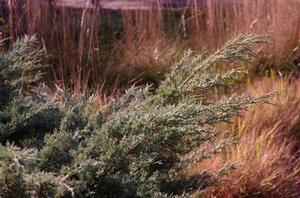
Sargent Juniper's evergreen foliage is bluish-green and very uniform. In the Fall and Winter, there is a purplish cast to the foliage as well. Excellent groundcover and rock garden plant. It is also dry site and salt tolerant.
Juniperus chinensis var. sargentii

Juniperus conferta 'Blue Pacific'

Juniper - Shore
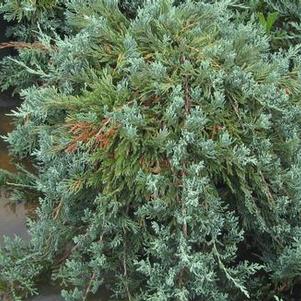
'Blue Pacific' Shore Juniper's evergreen foliage is silvery-blue and very soft and fluffy in texture. Makes an excellent groundcover, especially in salt-affected sites. Not as prickly as most Junipers.
Juniperus conferta 'Blue Pacific'

Juniperus horizontalis 'Bar Harbor'

Juniper
The deep green prostrate foliage of 'Bar Harbor' Juniper takes on a purplish cast in Winter. A tough evergreen groundcover that works well in rock gardens and in salt-exposed areas.
Juniperus horizontalis 'Bar Harbor'

Juniperus horizontalis 'Wiltoni'

Juniper - Blue Rug
Juniperus horizontalis 'Wiltoni' has bright blue evergreen foliage that forms a dense, slow growing mat. The 'Blue Rug' Juniper makes an excellent, colorful groundcover for salty, windy and rocky locations.
Juniperus horizontalis 'Wiltoni'

Juniperus horizontalis 'Plumosa'

Juniper - Andorra

Sometimes called Juniperus 'Depressa Plumosa' in the nursery trade, this has been a tried and true groundcover Juniper for a long time.  The fine bluish-green foliage is neat and compact.  My favorite aspect of it is the lovely plum-purple color it takes on in the winter.  It was introduced by Andorra Nurseries in 1907 in Philadelphia, and has been a dry-site staple ever since.

Juniperus horizontalis 'Plumosa'

Juniperus procumbens 'Nana'

Juniper - Dwarf Japanese Garden
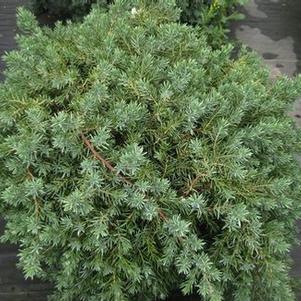
The bluish-green foliage of Juniperus procumbens 'Nana' forms a stiff, sculpted mat. Evergreen, salt tolerant and slow growing, it is particularly useful in combination with rocks. This is a Juniper commonly used to make Bonsai.
Juniperus procumbens 'Nana'

Juniperus squamata 'Blue Star'

Juniper - Blue Star Single Seed
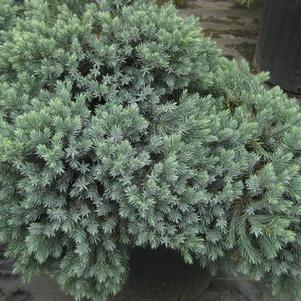
The foliage of Juniperus squamata 'Blue Star' forms a dense, vivid blue mound, looking like a puffy blue cloud. Evergreen and slow growing.
Juniperus squamata 'Blue Star'

Juniperus virginiana Emerald Sentinel™(Corcorcor)

Eastern Redcedar

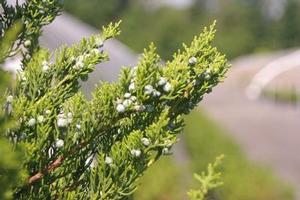
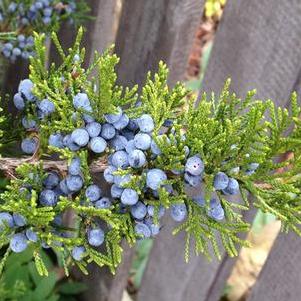
Juniperus virginiana Emerald Sentinel has green needles that are set off by vivid blue fruit in Fall and Winter. Evergreen foliage takes on purple tones in Winter and is salt tolerant. The berry set makes this a wonderful cut green for Winter arrangements. An excellent Conard-Pyle introduction and our favorite J. virginiana, bar none. P.H.S. Gold Metal Plant. Salt and wet site tolerant.

Juniperus virginiana Emerald Sentinel™(Corcorcor)

Juniperus virginiana var. silicicola 'Brodie'

Eastern Redcedar
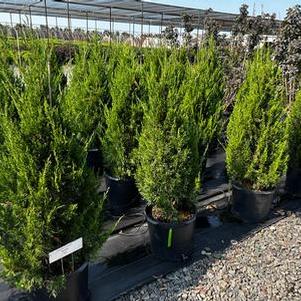
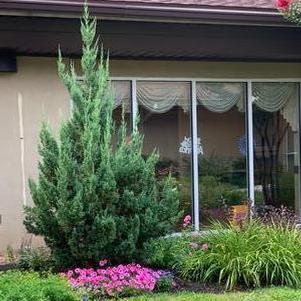
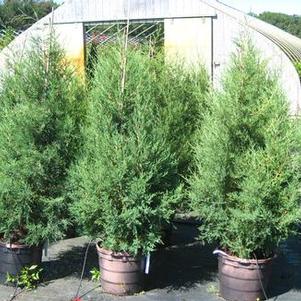
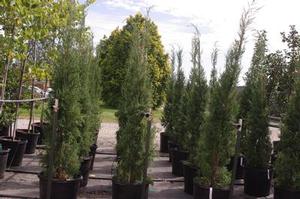
Juniperus virginiana var. silicicola 'Brodie' is a green, tightly columnar form of our native Redcedar, excellent as a tidy hedge or screen in a non-deer area. An evergreen that does well in seashore locations.
Juniperus virginiana var. silicicola 'Brodie'

Juniperus- Also see Woody Groundcovers

See Woody Groundcovers
Juniperus-   Also see Woody Groundcovers

Kalimeris incisa 'Blue Star'

Japanese Aster
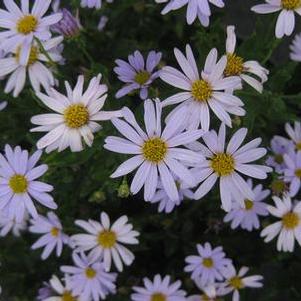
Kalimeris incisa 'Blue Star' has pale blue Aster-like flowers held above deep green foliage, blooming from June to Fall. A deservedly popular perennial in Europe.
Kalimeris incisa 'Blue Star'

Kalmia latifolia 'Elf'

Mountain Laurel
Kalmia latifolia 'Elf' is a compact form from Dick Jaynes of Broken Arrow Nursery in Connecticut, sporting light pink flower buds which open to white in June. This Mountain Laurel is tidy looking and evergreen.
Kalmia latifolia 'Elf'

Kalmia latifolia 'Olympic Fire'

Mountain Laurel
The red buds of Kalmia latifolia 'Olympic Fire' open to pink ballet skirt-like flowers in June, over good dark evergreen foliage. Introduced by Melrose Nursery of Washington State.
Kalmia latifolia 'Olympic Fire'

Kalmia latifolia 'Olympic Wedding'

Mountain Laurel
The pink flower buds of Kalmia latifolia 'Olympic Wedding' open to pale pink flowers in June with a maroon band. Reddish new growth matures to a dark glossy green, evergreen.
Kalmia latifolia 'Olympic Wedding'

Kalmia latifolia 'Sarah'

Mountain Laurel
The bright red buds of Kalmia latifolia 'Sarah' open to deep pink flowers in June with the classic ballet skirt shape. Medium shiny green foliage and another wonderful Dick Jaynes (the Kalmia King) cultivar, named for his wife (Sally to her friends).
Kalmia latifolia 'Sarah'

Kalmia latifolia 'Minuet'

Mountain Laurel
A really compact Mountain Laurel with pink buds that open to white with a wide maroon band in mid-summer. Foliage is the usual dark lustrous green, but smaller. A lovely Dick Jaynes introduction.
Kalmia latifolia 'Minuet'

Kalmia latifolia 'Nipmuck'

Mountain Laurel
The flower buds of 'Nipmuck' are a deep red opening to a soft pink on the inside and dark pink on the outside. Another show-stopper from Dick Jaynes.
Kalmia latifolia 'Nipmuck'

Kerria japonica 'Golden Guinea'

Japanese Kerria
Kerria japonica 'Golden Guinea' has single yellow flowers. It is a repeat bloomer when pruned a little.
Kerria japonica 'Golden Guinea'

Kerria japonica 'Pleniflora'

Japanese Kerria
Kerria japonica 'Pleniflora' has double yellow flowers and reblooms well in Summer.
Kerria japonica 'Pleniflora'

Kirengeshoma koreana

Yellow Waxbells
Kirengeshoma koreana has thick-petaled yellow nodding bell-like flowers in June and July over maple-shaped leaves. It is considerably bigger (and less available) than K. palmata. Per Dan Hinkley, soon to be reclassified as a Hydrangea. (Huh?).
Kirengeshoma koreana

Kirengeshoma palmata

Yellow Waxbells

The interesting thick-petaled yellow bell-like flowers of Kirengeshoma palmata appear on blackish stems in August and September, followed by weird three-horned seed capsules (Dr. Alan Armitage calls them “Stephen King ... Fruit"), slow to get established, needs a moist woodland setting but definitely something different for the connoisseur. Per Dan Hinkley, soon to be reclassified as a Hydrangea (go figure).

Kirengeshoma palmata

Kniphofia uvaria 'Early Hybrids'

Red Hot Poker
'Early Hybrids' Red Hot Poker has dense spikes of red-orange-yellow tubular flowers in mid-Summer which are very attractive to hummingbirds and butterflies. Dry site tolerant.
Kniphofia uvaria 'Early Hybrids'

Koelreuteria paniculata 'Coral Sun'

Golden Rain Tree
'Coral Sun' Golden Rain Tree is a recent introduction from Holland. The new foliage on this small tree is an amazing mix of orange and red, maturing to a medium green, with bright yellow flower panicles in mid-Summer. Papery seed capsules, like little Chinese lanterns, add to its late Summer and Fall interest.
Koelreuteria paniculata 'Coral Sun'

Lagerstroemia x Burgundy Cotton® ('Whit VI')

Crapemyrtle
Lagerstroemia indica Burgundy Cotton® has deep burgundy new growth, which sets off the red buds opening to white flowers in mid to late Summer. A Dr. Carl Whitcomb introduction.
Lagerstroemia x Burgundy Cotton® ('Whit VI')

Lagerstroemia x 'Carolina Beauty'

Crapemyrtle
Lagerstroemia indica 'Carolina Beauty' has dark red flowers in July and August. An upright form, originally found in South Carolina.
Lagerstroemia x 'Carolina Beauty'

Lagerstroemia x 'Catawba'

Crapemyrtle
Lagerstroemia indica 'Catawba' has lavender-purple flowers in July and August, followed by excellent orange-red Fall color. An introduction from Dr. Don Egolf and the US National Arboretum.
Lagerstroemia x 'Catawba'

Lagerstroemia x Dynamite® ('Whit II')

Crapemyrtle
Lagerstroemia indica Dynamite® flowers are cherry red in July and August on an upright form with good lustrous green foliage. Another Dr. Carl Whitcomb introduction.
Lagerstroemia x Dynamite® ('Whit II')

Lagerstroemia x 'Hopi'

Crapemyrtle
Lagerstroemia indica 'Hopi' has medium pink flowers in July and August and orange-red Fall color. Another winner from Dr. Don Egolf and the US National Arboretum.
Lagerstroemia x 'Hopi'

Lagerstroemia x 'Muskogee'

Crapemyrtle
Lagerstroemia indica 'Muskogee' has lavender flowers in July and August and red-orange Fall color. Another Dr. Egolf and US National Arboretum winner.
Lagerstroemia x 'Muskogee'

Lagerstroemia x 'Natchez'

Crapemyrtle
Lagerstroemia indica 'Natchez' has white flowers in July and August, spectacular mottled exfoliating bark and yellow-red Fall color. From Dr. Egolf and the US National Arboretum, truly a four season plant.
Lagerstroemia x 'Natchez'

Lagerstroemia x Pink Velour™ (Whit III)

Crapemyrtle

The red buds of Lagerstroemia indica Pink Velour open mid-Summer to dark pink flowers. The new foliage is a striking burgundy, changing to dark green. A great Dr.Carl Whitcomb introduction. Formerly named 'Royal Velvet'. P.H.S. Gold Medal Plant.

Lagerstroemia x Pink Velour™ (Whit III)

Lagerstroemia x Red Rocket® (Whit IV)

Crapemyrtle
Lagerstroemia indica Red Rocket® has bright red long blooming flowers on an upright small multi-stem tree. An excellent introduction from Dr. Carl Whitcomb of Oklahoma.
Lagerstroemia x Red Rocket® (Whit IV)

Lagerstroemia x 'Sioux'

Crapemyrtle
The dark pink flowers of Lagerstroemia indica 'Sioux' bloom over dark green foliage in July and August. A Dr. Egolf selection and considered by him to be very tough. Good maroon Fall color.
Lagerstroemia x 'Sioux'

Lagerstroemia x 'Tonto'

Crapemyrtle
Fuschia-red flowers in July and August, Lagerstroemia indica 'Tonto' is another great plant from Dr. Egolf and the US National Arboretum. The bark is an attractive tan and grey.
Lagerstroemia x 'Tonto'

Lagerstroemia x 'Tuskegee'

Crapemyrtle
Dark rose-pink flowers mid to late Summer and grey-tan exfoliating bark make Lagerstroemia indica 'Tuskegee' an excellent plant from Dr. Egolf and the US National Arboretum.
Lagerstroemia x 'Tuskegee'

Lagerstroemia x 'Velma's Royal Delight'

Crapemyrtle
Lagerstroemia indica 'Velma's Royal Delight' boasts magenta flowers in Summer and a compact habit along with extreme cold hardiness. From Dr. John Pair of Kansas State University.
Lagerstroemia x 'Velma's Royal Delight'

Lagerstroemia x 'Victor'

Crapemyrtle
Crimson flowers in July and August, Lagerstroemia indica 'Victor' has a dwarf habit. A selection from Byers Nursery of Louisiana.
Lagerstroemia x 'Victor'

Lagerstroemia x 'White Chocolate'

Crapemyrtle
Wine colored foliage sets off the white flowers of Lagerstroemia indica 'White Chocolate' stunningly. A 'Pokomoke' seedling selection, but hardier than its parent, from the University of Georgia and the Center for Applied Nursery Research.
Lagerstroemia x 'White Chocolate'

Lagerstroemia x 'Zuni'

Crapemyrtle
Lavender flowers in mid to late Summer, good fall color and yes, Lagerstroemia indica 'Zuni' is another great one from Dr. Egolf and the US National Arboretum.
Lagerstroemia x 'Zuni'

Lagerstroemia x 'Arapaho'

Crapemyrtle
The flowers on 'Arapaho' Crapemyrtle are a deep red and very large, appearing in mid to late Summer. Foliage is glossy and mildew-resistant. A recent US National Arboretum introduction and one of our favorite red Crapemyrtles.
Lagerstroemia x 'Arapaho'

Lagerstroemia x 'Tuscarora'

Crapemyrtle

Lagerstroemia indica 'Tuscarora' has coral-pink flowers which appear in mid to late Summer.  Another winner from Dr. Don Egolf and the US National Arboretum.

Lagerstroemia x 'Tuscarora'

Lamium maculatum 'Orchid Frost'

Spotted Nettle
Lamium maculatum 'Orchid Frost' has lots of orchid-pink flowers from April to June on top of silver leaves with blue-green margins. It has good disease resistance and was found by Mike Bovio of English Gardens. Trim in Summer when it becomes leggy.
Lamium maculatum 'Orchid Frost'

Lamium maculatum 'Purple Dragon'

Spotted Nettle
The large deep purple flowers of Lamium maculatum 'Purple Dragon' appear from April to June(reminiscent of snapdragons) above silvery foliage with green margins. Selected by Chris van Sanden of Hortech, Inc. Trim in Summer for best appearance.
Lamium maculatum 'Purple Dragon'

Lamium maculatum 'Shell Pink'

Spotted Nettle
Lamium maculatum 'Shell Pink' is a variety of Spotted Nettle with light pink flowers from April to June over foliage with a white central stripe. Summer trimming helps keep it nice.
Lamium maculatum 'Shell Pink'

Lamium maculatum 'Red Nancy'

Spotted Nettle
Lamium maculatum 'Red Nancy' has bright rose-pink flowers from April to June on top of silver leaves with a green border. Summer appearance is best if periodically trimmed.
Lamium maculatum 'Red Nancy'

Lamium maculatum 'White Nancy'

Spotted Nettle
The white snapdragon-like flowers of Lamium maculatum 'White Nancy' appear from April to June, over silver leaves with a green edge. Will maintain its lovely foliage best if trimmed back in Summer.
Lamium maculatum 'White Nancy'

Lamium- See Perennial Groundcovers

Lamium-   See Perennial Groundcovers

Lavandula angustifolia 'Hidcote'

Lavender
Lavandula angustifolia 'Hidcote' has lavender -purple flowers in July and August over fragrant foliage. It must have a dry site to make it in the Northeast.
Lavandula angustifolia 'Hidcote'

Lavandula angustifolia 'Munstead'

Lavender
Lavandula angustifolia 'Munstead' has lavender flowers in June, July and August over fragrant foliage. It must have a dry site to survive on the East Coast.
Lavandula angustifolia 'Munstead'

Lavandula x intermdedia 'Grosso'

Lavender
Lavandula x intermedia 'Grosso' is a vigorous Lavender with large violet-blue flower spikes in July and August over clean silvery foliage. Needs good drainage and likes a dry site.
Lavandula x intermdedia 'Grosso'

Leonotus leonurus

Leonotus leonurus is a Fall blooming annual that makes Mums look like a waste of time. Bright orange flowers on many-tiered levels appear in September and continue without stopping well into November until a heavy freeze. It looks somewhat like a Buddleia on steroids. Our friends Flip and Sally Miller gave us our first plant of this for our garden, and we loved it just as much as they said we would.
Leonotus leonurus

Leptodermis oblonga

Leptodermis oblonga is a dwarf ground-hugging shrub with small purple-pink lilac-shaped flowers starting in June and continuing all Summer. It is very fragrant.
Leptodermis oblonga

Lespedeza thunbergii 'Gibraltar'

Bush Clover
Rose-purple pea-like flowers August and September, Lespedeza thunbergii 'Gibraltar' tolerates dry sites. Treat as cut-back shrub. Found by the great plantsman (and artist!) William Frederick, Jr.
Lespedeza thunbergii 'Gibraltar'

Lespedeza thunbergii 'Pink Cascade'

Bush Clover
Lespedeza thunbergii 'Pink Cascade' is a Bush Clover with pink pea-like flowers on cascading branches that makes a delicate show in August and September. Treat as a cut-back shrub.
Lespedeza thunbergii 'Pink Cascade'

Lespedeza thunbergii 'Spring Grove'

Bush Clover
Lespedeza thunbergii 'Spring Grove' has purple pea-like flowers in August and September. It tolerates dry sites. Treat as cut-back shrub. A Dr. Michael Dirr selection, found in Spring Grove Cemetary in Cincinnati, Ohio.
Lespedeza thunbergii 'Spring Grove'

Leucanthemum x superbum 'Becky'

Shasta Daisy
'Becky' Shasta Daisy has white flowers over, glossy green leaves for an extended Summer bloom period. It was named for Becky Steward of Decatur, GA. 2003 Perennial Plant of the Year. Salt tolerant.
Leucanthemum x superbum 'Becky'

Leucothoe axillaris

Coast Leucothoe
Leucothoe axillaris is a lovely Spring-blooming broad leaf evergreen, with white racemes in April and May. Branching habit is an interesting zigzag. Prefers acid, moist soil.
Leucothoe axillaris

Leucothoe fontanesiana 'Rainbow'

Dog-hobble
New growth is a striking blend of white, pink and green changing to cream and green as it matures, Leucothoe fontanesiana 'Rainbow' has white fragrant flowers in May. A selection by Girard Nursery in Ohio. Evergreen, turning plum colored in Winter.
Leucothoe fontanesiana 'Rainbow'

Leucothoe- See Woody Groundcovers

Leucothoe-   See Woody Groundcovers

Leymus arenarius 'Blue Dune'

Dune Grass
The wide powder blue leaves of Leymus arenarius 'Blue Dune' combines with seedheads that look a little like barley. An aggressive spreader that likes dry sites. Salt and wind tolerant. Good for erosion control because it's so vigorous.
Leymus arenarius 'Blue Dune'

Leymus arenarius 'Blue Dune'- See Grasses

Leymus arenarius 'Blue Dune'-   See Grasses

Liatris spicata 'Floristan White'

Gayfeather
Liatris spicata 'Floristan White' has white flower spikes in June and July. It makes a good cut flower, and adds an attractive vertical note in the garden.
Liatris spicata 'Floristan White'

Liatris spicata 'Kobold'

Gayfeather
Liatris spicata 'Kobold' has lavender-magenta flower spikes in June and July and makes a good cut flower. If deadheaded promptly, it will rebloom.
Liatris spicata 'Kobold'

Ligularia dentata 'Othello'

Goldenray - Bigleaf
The bright yellow daisy-like flowers of Ligularia dentata 'Othello' are held above big bronze-green leaves with purple undersides. Prefers moist sites.
Ligularia dentata 'Othello'

Ligularia dentata 'Desdemona'

Goldenray - Bigleaf
Ligularia dentata 'Desdemona' has golden daisy flowers that are displayed on reddish-purple stems in July and August. Foliage is particulary striking, with large leaves emerging beet-red with purple undersides in Spring , aging by mid Summer to a bronze-green. Loves moist sites.
Ligularia dentata 'Desdemona'

Ligularia stenocephala 'Little Rocket'

Ligularia
Ligularia stenocephala 'Little Rocket' has bright yellow flower spikes in mid-summer above green heart-shaped leaves. Likes good moisture, not dry conditions.
Ligularia stenocephala 'Little Rocket'

Ligularia stenocephala 'The Rocket'

Ligularia
The tall yellow spires of flowers of Ligularia stenocephala 'The Rocket' cover the burgundy-red stems over dentate green leaves in mid Summer. This plant is best in moist shade, not dry sun.
Ligularia stenocephala 'The Rocket'

Ligustrum sinense 'Swift Creek'

Privet - Chinese
Ligustrum sinense 'Swift Creek' is a Privet that makes me eat my words about never growing Ligustrum. It has beautiful ivory and green variegation with a compact habit and does well in shady spots. Mark Griffith of Georgia says it is his favorite Variegated Privet. He obtained it from Lanny Thomas of Swift Creek Nursery in Clayton, NC. 'Swift Creek' Privet is deciduous.
Ligustrum sinense 'Swift Creek'

Lilium formosanum

Formosa Lily
A stunning white Lily that is wonderfully fragrant, Lilium formosanum blooms in mid-summer and can be grown from seed to flowering size in less than 2 years. Amazing! Flowers are the classic trumpet shape, with yellow-green interiors.
Lilium formosanum

Lindera benzoin

Spicebush
Lindera benzoin has delicate pale yellow flowers in early Spring, a standout in leafless woodsy vistas. In the Fall the lemon-yellow foliage lights up the woods. Female plants also have shiny red fruit. Lindera benzoin is wet site tolerant and deciduous.
Lindera benzoin

Lindera glauca var. salicifolia

Spicebush - Greybush
The leathery narrow green leaves of Lindera glauca var. salicifolia turn the most spectacular combination of orange, red and purple in Fall. Leaves are held well into Winter, turning a very attractive tan. Shiny black small fruit is also interesting in Fall. A 2009 P.H.S. Gold Medal Plant.
Lindera glauca var. salicifolia

Lindera reflexa

Spicebush - Chinese
Lindera reflexa is the Chinese version of our native Spicebush, with yellow flowers in early Spring, red glossy fruit in Fall (if you have both male and female plants) and larger, blue-green leaves.
Lindera reflexa

Liquidambar styraciflua 'Silver King'

Sweetgum - American
With variegated green and white leaves, Liquidambar styraciflua 'Silver King' is a slower-growing form of our adaptable native tree, and wet site tolerant. Multicolored Fall foliage.
Liquidambar styraciflua 'Silver King'

Liquidambar styraciflua 'Slender Silhouette'

Sweetgum - American
Extremely narrow form, Liquidambar styraciflua 'Slender Silhouette' was introduced by that superb plantsman Don Shadow. It has beautiful glossy green leaves, is wet site tolerant, and is virtually seedless. Fall color is yellow to burgundy. It makes an amazing upright element in the landscape.
Liquidambar styraciflua 'Slender Silhouette'

Liriodendron tulipifera 'Aureomarginatum'

Tulip Tree - Yellow Variegated
The leaves of Liriodendron tulipifera 'Aureomarginatum' are interestingly variegated with yellow irregular margins which show up most dramatically in early Summer. It has the green-yellow-orange tulip-shaped flower of the species.
Liriodendron tulipifera 'Aureomarginatum'

Liriodendron tulipifera 'Little Volunteer'

Tulip Tree
Liriodendron tulipifera 'Little Volunteer' is a really compact Tulip Tree found by Harald Neubauer in Tennessee. Leaves and internodes are half normal size, perfect for smaller gardens.
Liriodendron tulipifera 'Little Volunteer'

Liriope muscari 'Big Blue'

Lily-turf
The lavender-blue flowers of Liriope muscari 'Big Blue' appear in late Summer. It tolerates dry and difficult sites, and is an evergreen spreader.
Liriope muscari 'Big Blue'

Liriope muscari 'Monroe White'

Lily-turf
Liriope muscari 'Monroe White' has white flower spikes in mid-Summer over green strap-like leaves. It is a tough evergreen clumping groundcover.
Liriope muscari 'Monroe White'

Liriope muscari 'Pee Dee Gold Ingot'

Lily-turf
The chartreuse leaves in Spring of Liriope muscari 'Pee Dee Gold Ingot' turn to yellow-gold in Summer. Lavender flowers appear in late Summer. Clump-forming and semi-evergreen. It was found in Myrtle Beach, South Carolina by Ursula Hertz.
Liriope muscari 'Pee Dee Gold Ingot'

Liriope muscari 'Variegata'

Lily-turf - Variegated
Lavender-blue flowers in late Summer appear over variegated foliage. Liriope muscari 'Variegata' tolerates dry sites and is a showy evergreen clump.
Liriope muscari 'Variegata'

Lobelia cardinalis

Cardinal Flower
The scarlet flowers of Lobelia cardinalis appear in August and September. It is wet site loving and attracts hummingbirds and butterflies.
Lobelia cardinalis

Lobelia cardinalis 'Fried Green Tomatoes'

Cardinal Flower
'Fried Green Tomatoes' Cardinal Flower has tall tomato-red flowers spikes in August and September. It attracts hummingbirds and butterflies. The foliage is particularly striking, starting as a purple-red rosette in Spring, aging to bronze by late Summer. Loves wet sites.
Lobelia cardinalis 'Fried Green Tomatoes'

Lobelia siphilitica

Lobelia - Big Blue
Lobelia siphilitica has clear blue flower spikes appearing in August and September, attracting hummingbirds, butterflies and insects. Does well in full sun, even more than L. cardinalis. Very wet site tolerant, and naturalizes well from seed.
Lobelia siphilitica

Lonicera nitida 'Baggeson's Gold'

Honeysuckle - Boxleaf
Lonicera nitida 'Baggeson's Gold' has tiny yellow leaves on irregular mounded shrub. Its color is a deeper yellow in cooler weather. Does well as a tightly trimmed miniature evergreen hedge and is best in shade.
Lonicera nitida 'Baggeson's Gold'

Lonicera periclymenum 'Harlequin'

Honeysuckle
Lonicera periclymenum 'Harlequin' has pink and cream flowers over bright blue-green and creamy white variegated foliage.
Lonicera periclymenum 'Harlequin'

Lonicera pileata

Honeysuckle - Privet
Lonicera pileata is a beautiful glossy small evergreen groundcover shrub. It often produces glowing amethyst fruits in late Summer on older plants. An excellent choice for shady deer-dominated areas. A 2009 P.H.S. Gold Medal Plant.
Lonicera pileata

Lonicera pileata 'Moss Green'

Honeysuckle - Privet
Lonicera pileata 'Moss Green' is a lower form of the evergreen groundcover shrub. It has very neat tiny paired leaves which provide interest in Summer and Winter. Great in shady deer-dominated areas.
Lonicera pileata 'Moss Green'

Lonicera sempervirens 'Magnifica'

Honeysuckle - Trumpet
The bright orange tubular flowers of Lonicera sempervirens Magnifica are set off by yellow throats. It has a late Spring to Summer bloom period. Trumpet vine is an important food source for the hummingbirds. Mildew resistant.
Lonicera sempervirens 'Magnifica'

Lonicera sempervirens 'Alabama Crimson'

Honeysuckle - Trumpet
The scarlet flowers on Lonicera sempervirens 'Alabama Crimson' start in May, and continue for a long blooming period throughout the Summer. Trumpet vine is a favorite plant of the hummingbirds.
Lonicera sempervirens 'Alabama Crimson'

Lonicera sempervirens 'John Clayton'

Honeysuckle - Trumpet
The tubular yellow flowers of Lonicera sempervirens 'John Clayton' appear on a compact repeat-blooming form. The plant was found in Virginia and is loved by hummingbirds.
Lonicera sempervirens 'John Clayton'

Lonicera sempervirens 'Crimson Cascade'

Honeysuckle - Trumpet
The bright red tube like flowers with yellow stamens on Lonicera sempervirens 'Crimson Cascade' appear early in the Summer. It reblooms well, which makes hummingbirds happy. A very mildew-resistant selection made by Brushwood Nursery, from L. 'Major Wheeler'.
Lonicera sempervirens 'Crimson Cascade'

Lonicera sempervirens 'Major Wheeler'

Honeysuckle - Trumpet
Coral-red flowers bloom for a very long time from late Spring through the Summer and visited often by hummingbirds. Lonicera sempervirens 'Major Wheeler' was found by Charles Wheeler of the NC Botanical Garden Foundation.
Lonicera sempervirens 'Major Wheeler'

Lonicera x heckrotii 'Gold Flame'

Honeysuckle - Everblooming
Lonicera x heckrotii 'Gold Flame' has rose-pink flowers with yellow centers. It reblooms in the Fall, which makes it an important nectar source for migrating hummingbirds.
Lonicera x heckrotii 'Gold Flame'

Lonicera- See Woody Groundcovers pileata

Lonicera-   See Woody Groundcovers pileata

Loropetalum chinensis 'Zhuzhou Fuchsia'

Chinese Fringe Flower
Loropetalum chinensis 'Zhuzhou Fuchsia' has deep pink flowers in April and May, and spectacular maroon-burgundy leaves. The hardiest of the Fringe Flowers but still needs some protection. You can tell by the flowers that it is in the Hamamelis family.
Loropetalum chinensis 'Zhuzhou Fuchsia'

Lysimachia nummularia 'Aurea'

Creeping Jenny
Lysimachia nummularia 'Aurea' has bright golden-yellow leaves that hug the ground and form a dense, attractive mat of foliage. Small yellow flowers in Spring are not conspicuous, but the leaves get a bronzy-gold Fall color that is really attractive. Great for rock gardens and walls, fast spreading.
Lysimachia nummularia 'Aurea'
Botanical Name     Common Name
A B C D E F-G H I J-L M-O P Q R S T U-Z ALL