Pleasant Run Nursery Plant Catalog

Botanical Name     Common Name
A B C D E F-G H I J-L M-O P Q R S T U-Z ALL

Sagina subulata

Moss - Irish
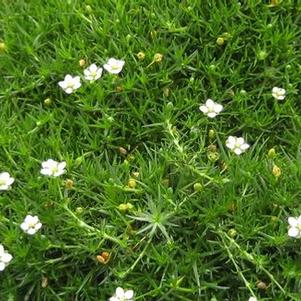
Irish Moss forms an evergreen mat of mossy foliage that is covered with tiny white flowers in May and June. Prefers cool shade and good drainage. Landscape designer Mike Waddell of Philadelphia uses this and Scotch Moss to great effect in his Inner City garden designs.
Sagina subulata

Sagina subulata 'Aurea'

Moss - Scotch
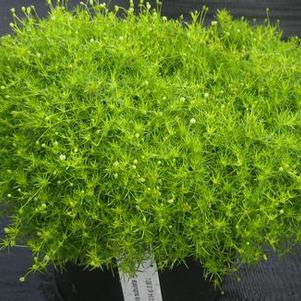
The evergreen foliage of Sagina subulata 'Aurea' forms a chartreuse yellow mat, with tiny white flowers in May and June. This selection needs more shade that 'Iris Moss' and good drainage helps too. Great for a wall garden or a shady roof top garden.
Sagina subulata 'Aurea'

Salix 'Flame'

Willow
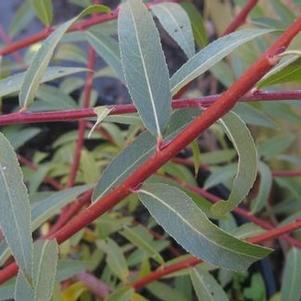
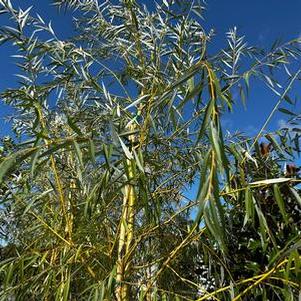
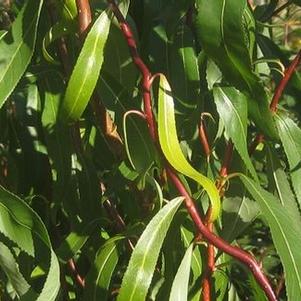
The narrow green leaves of 'Flame' Willow turn yellow in Fall on curly tipped stems. The stem color is remarkable in Fall and Winter, turning an increasingly vivid orange-red as the weather cools. Found by Melvin Bergeson of Fertile(!), Minnesota. It is also salt tolerant. Cut back yearly for best Winter color.
Salix  'Flame'

Salix caprea

Goat Willow
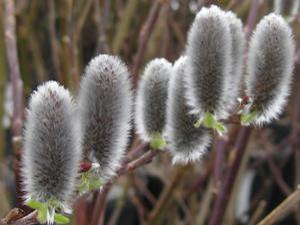
The fuzzy silver male catkins appear in early Spring and should be cut just as they emerge, to put in dried flower arrangements. The leaves are green, turning to yellow in the Fall. This plant is extremely wet site tolerant, as well as salt tolerant. Best catkin production is achieved if the plant is cut back hard every Summer.
Salix caprea

Salix chaenomeloides

Willow - Japanese Pussy
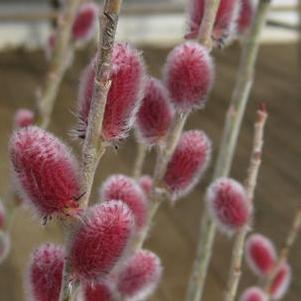
The large red flower buds of Salix chaenomeloides open in early Spring to long showy pink and silver fuzzy male catkins. Should be cut back hard every Summer for best flower production. Salt and wet site tolerant.
Salix chaenomeloides

Salix melanostachys

Willow - Black Pussy
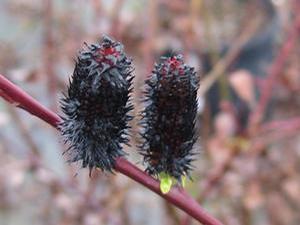
Spring male catkins are purple-black with red anthers, making a very showy combination. The twigs are also purple-black in Winter, for added interest. Like other shrub willows, Black Pussy Willow benefits from being cut back hard in Summer. It is also salt and wet site tolerant.
Salix melanostachys

Salvia nemorosa 'Blue Hill' ('Blauhugel')

Sage - Hybrid
Salvia nemorosa 'Blue Hill' has bright blue flowers June and July and reblooms will if cut back. Habit is compact.
Salvia nemorosa 'Blue Hill' ('Blauhugel')

Salvia nemorosa 'Caradonna'

Sage - Hybrid
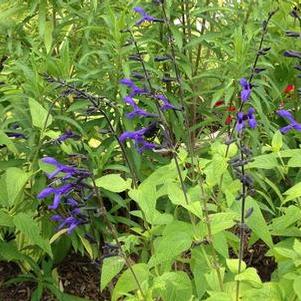
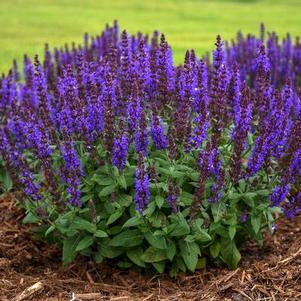
Salvia nemorosa 'Caradonna' has violet-blue flowers on tall dark purple flower stems making a very showy combination. From Zillmer Plants in Germany and introduced into this country by super plant dudes, Dale Hendricks and Ron Strasko.
Salvia nemorosa 'Caradonna'

Salvia nemorosa 'East Friesland' ('Ostfriesland')

Sage - Hybrid
Salvia nemorosa 'East Friesland' has blue-purple flowers in May and June and reblooms well if cut back after blooming.
Salvia nemorosa 'East Friesland' ('Ostfriesland')

Salvia nemorosa Marcus® ('Haeumanarc')

Sage - Hybrid
Salvia nemorosa Marcus® has violet-blue flowers on a very compact form, like a short Salvia 'May Night'. From Haussermann Nursery in Germany. It reblooms well when deadheaded.
Salvia nemorosa Marcus® ('Haeumanarc')

Salvia nemorosa 'May Night' ('Mainacht')

Sage - Hybrid
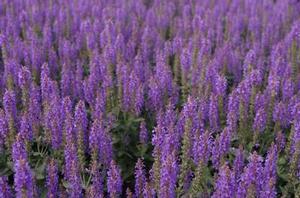
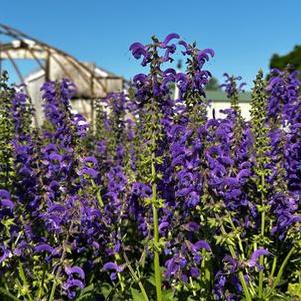
Salvia nemorosa 'May Night' has purple flowers in May and June and reblooms beautifully if cut back after blooming. 1997 Perennial Plant of the Year.
Salvia nemorosa 'May Night' ('Mainacht')

Salvia nemorosa Sensation Rose®

Sage - Perennial
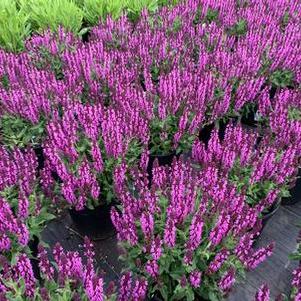
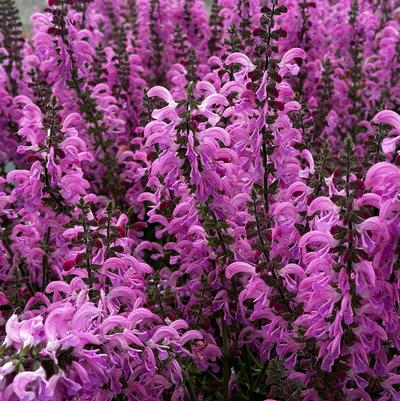
Salvia nemorosa Sensation Rose® has Summer flowers that are a clear pink over a compact, light green plant. Dead heading will prolong the bloom period. From the Florensi's Breeding Project of Europe.
Salvia nemorosa Sensation Rose®

Salvia nemorosa 'Snow Hill' ('Schneehugel')

Sage - Hybrid
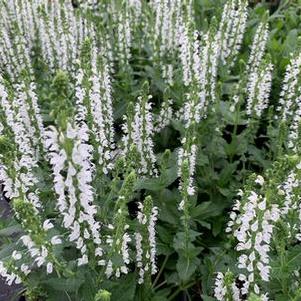
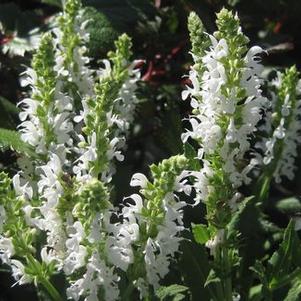
Salvia nemorosa 'Snow Hill' has white flowers in June and July, and reblooms if cut back after blooming.
Salvia nemorosa 'Snow Hill' ('Schneehugel')

Salvia pratensis 'Rhapsody in Blue'

Sage - Meadow
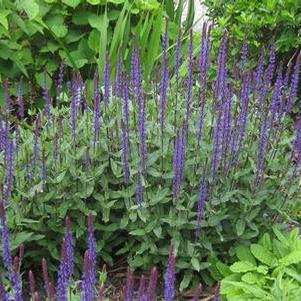
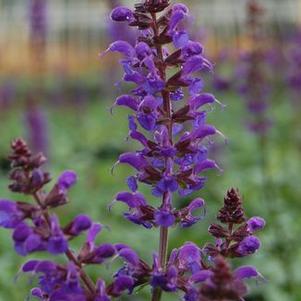
Salvia pratensis 'Rhapsody in Blue' has deep blue-violet flowers on tall spikes. The plant is bushy and upright and was selected by Piet Oudolf for both flower power and habit. Benefits from dead heading.
Salvia pratensis 'Rhapsody in Blue'

Salvia pratensis 'Eveline'

Sage - Meadow
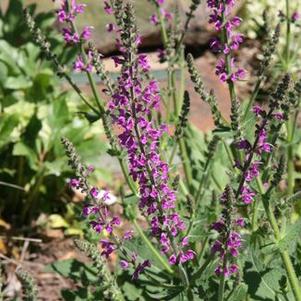
Salvia pratensis 'Eveline' has large pink flowers on tall spikes that are intensified in color by the darker pink calyces. A beautiful pink cut flower, because of its long stems as well as its intense color. Cut back after blooming for an impressive rebloom.
Salvia pratensis 'Eveline'

Sambucus nigra Black Lace® ('Eva')

European Elder
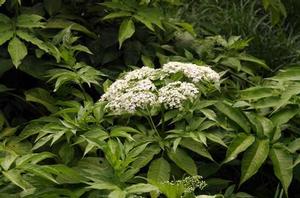
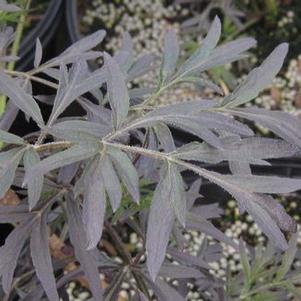
The showy pink and white flat topped cymes on Sambucus nigra Black Lace® appear in June, contrasting vividly with the lacy purple-black foliage. From the renowned plant breeders at East Malling, England. Profits from cutting back periodically to prevent legginess.
Sambucus nigra Black Lace® ('Eva')

Sarcococca confusa

Sweetbox
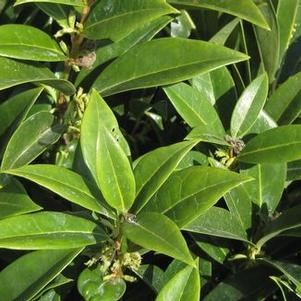
The white flowers of Sarococca confusa appear in March and have a strong, sweet fragrance. Foliage is dark green, shiny and evergreen. Often bears red fruit which mature as glossy black. Very drought tolerant when established, but needs some Winter temperature protection
Sarcococca confusa

Sarcococca hookeriana

See Woody Groundcovers
Sarcococca hookeriana

Sarcococca hookeriana var. humilis

Sweetbox
Sarcococca hookeriana var. humilis has white extremely fragrant flowers in Spring, and is an excellent slow-growing groundcover for dry shade. It is evergreen with lustrous dark green foliage. P.H.S. Gold Medal Plant.
Sarcococca hookeriana var. humilis

Scabiosa columbaria 'Butterfly Blue'

Pincushion Flower
Scabiosa columbaria 'Butterfly Blue' has lavender-blue pincushion-form flowers held above clean green foliage in June. 2000 Perennial Plant of the Year.
Scabiosa columbaria 'Butterfly Blue'

Schizachyrium scoparium 'The Blues'

Little Bluestem
Schizachyrium scoparium 'The Blues' has blue foliage in the Summer. The burgundy-orange Fall color is spectacular, and is showiest in a dry, well-drained site. If you want to be impressed, go see the mass planting at Scott Arboretum in Swarthmore, PA. Another wonderful plant by Dr. Richard Lighty, which keeps an upright habit best in dry site conditions.
Schizachyrium scoparium 'The Blues'

Schizophragma hydrangeoides 'Moonlight'

False Hydrangea-vine
Schizophragma hydrangeoides 'Moonlight' has big white lacecap flowers that appear in mid Summer, over silver-veined green leaves. P.H.S. Gold Medal Plant. Per Dan Hinkley, soon to be reclassified as a Hydrangea, which makes some sense.
Schizophragma hydrangeoides 'Moonlight'

Schizophragma hydrangeoides 'Roseum'

False Hydrangea-vine
Schizophragma hydrangeoides 'Roseum' has pale pink flat lace cap flowers in mid Summer on a slow-growing woody vine. This False Hydrangea-vine is soon to be called a Hydrangea.
Schizophragma hydrangeoides 'Roseum'

Sedum cauticolum

Stonecrop
Sedum cauticolum has round blue-gray leaves that are topped by rose-pink flowers in August and September. Habit is tight, compact and very showy. Excellent for rock gardens.
Sedum cauticolum

Sedum kamtschaticum

Stonecrop - Russian
The attractive toothed green leaves of Sedum kamtschaticum are topped by vivid yellow-gold flowers in June. Makes a good semi-evergreen mat for dry places.
Sedum kamtschaticum

Sedum kamtschaticum var. ellacombeanum

Stonecrop - Russian
The yellow flowers of Sedum kamtschaticum var. ellacombeanum appear on tidy, regular green foliage which is evergreen. It tolerates dry sites and forms a thick mat. It has a tighter habit than S. kamtschaticum, but is taller because it is more upright.
Sedum kamtschaticum var. ellacombeanum

Sedum rupestre 'Angelina'

Stonecrop - Stone Orpine
Sedum rupestre 'Angelina' has striking chartreuse to gold needle-like evergreen foliage, topped by inconspicuous yellow flowers in Summer. Takes on a reddish tinge on the tips in Winter, tolerates dry sites and roots itself easily. Also excellent in containers.
Sedum rupestre 'Angelina'

Sedum spectabile 'Neon'

Stonecrop - Showy
Sedum spectabile 'Neon' has green foliage that is topped by vivid magenta-pink flowers in late summer. A sport of S. 'Brilliant', noted for the intensity of the flower color. Needs a dry site.
Sedum spectabile 'Neon'

Sedum spurium 'Fulda Glow' ('Fuldaglut')

Stonecrop - Two Row
Sedum spurium 'Fulda Glow' is an improved 'Dragon's Blood' Sedum, with bronze-red foliage topped by short rose-red flowers in July. Winter foliage color is bronze-purple. It is evergreen and prefers a dry site.
Sedum spurium 'Fulda Glow' ('Fuldaglut')

Sedum spurium 'Red Carpet'

Stonecrop - Two Row
The red tinged evergreen foliage of Sedum spurium 'Red Carpet' turns burgundy in Winter, especially in full sun. There is some production of red flowers in Summer. Produces a thick mat in dry locations.
Sedum spurium 'Red Carpet'

Sedum x 'Autumn Joy' ('Herbstfreude')

Stonecrop - Showy
Sedum x 'Autumn Joy' has rose-pink flowers, blue foliage and needs a dry site to perform best. Introduced by George Arends of Germany.
Sedum x 'Autumn Joy' ('Herbstfreude')

Sedum x 'Bertram Anderson'

Stonecrop
The purple-grey round foliage of Sedum x 'Bertram Anderson' lies flat on the ground and is topped with rose-pink flowers in July and August. The foliage color is more intense in colder weather. Needs a dry site.
Sedum x 'Bertram Anderson'

Sedum x 'Maestro'

Stonecrop - Showy
Sedum x 'Maestro' is a sport of S. 'Matrona', with a better, more compact habit and color. Leaves are blue-green on purple stems, topped by light pink flowers in late Summer. Introduced by Gary Trucks. Needs a dry spot.
Sedum x 'Maestro'

Sedum x 'Matrona'

Stonecrop - Showy
Sedum x 'Matrona' has pale pink flowers and upright purple-gray foliage.. This stonecrop needs a dry site for best performance. From Ewald Hugen of Germany.
Sedum x 'Matrona'

Sedum- Also see Perennial Groundcovers

Also See Perennial Groundcovers
Sedum-  Also see Perennial Groundcovers

Sisyrinchium angustifolium 'Lucerne'

Blue Eyed Grass
Sisyrinchium angustifolium 'Lucerne' has blue flowers with yellow eyes and blooms most of the Summer. This Blue Eyed Grass tolerates dry site and salty, sites per Craig Sullivan of The Avant Gardener of N.Y.C.
Sisyrinchium angustifolium 'Lucerne'

Skimmia japonica 'Female'

Skimmia
Skimmia japonica 'Female' has white flowers in Spring, red fruit in Fall and Winter, and is evergreen. Needs male to fruit. Prefers dry and shady locations.
Skimmia japonica 'Female'

Skimmia japonica 'Male'

Skimmia
Pink flowers in Spring over evergreen foliage. Pollinator for female, and showy when in bloom. Must be in a dry and shady location.
Skimmia japonica 'Male'

Solidago rugosa 'Fireworks'

Goldenrod - Rough Stemmed
Solidago rugosa 'Fireworks' has bright yellow flowers in late Summer on a compact clump-forming plant. Selected by Ken Moore of the NC Botanical Gardens and introduced by Niche Gardens. Try is as a cut flower; it is great!
Solidago rugosa 'Fireworks'

Solidago sphacelata 'Golden Fleece'

Goldenrod
Solidago sphacelata 'Golden Fleece' has golden-yellow flowers from mid-August to October over semi-evergreen foliage. It spreads to form a tough adaptable groundcover with some shade tolerance. Another wonderful introduction from the Mt. Cuba folks.
Solidago sphacelata 'Golden Fleece'

Solidago x 'Little Lemon'

Goldenrod
The lemon-yellow flowers of Solidago x 'Little Lemon' appear in late Summer over extremely compact, finely textured foliage. It was bred originally as a good florist pot plant.
Solidago x 'Little Lemon'

Sorbaria sorbifolia 'Sem'

False Spirea
The new leaves of 'Sem' False Spirea emerge orange-red, set off by chartreuse-yellow older foliage in Spring and early Summer. Large fluffy white panicles start in July when the foliage has turned a uniform light green. Texture of plant is light and airy with delicate pinnate leaf form. Suckering habit.
Sorbaria sorbifolia 'Sem'

Sorgastrum nutans 'Sioux Blue'

Indian Grass
Sorgastrum nutans 'Sioux Blue' has copper-yellow showy inflorescences, which are among the showiest of all grass flowers. The foliage is an attractive blue-green. A notable introduction by that great plantsman, Rick Darke.
Sorgastrum nutans 'Sioux Blue'

Spigelia marilandica

Indian Pink
The flowers of Spigelia marilandica are bright red on the outside and lemon-yellow on the inside. A striking combination, especially since the petals curl outward at the ends. Blooms in early Summer and looks stunning in a mass. Likes moist sites.
Spigelia marilandica

Spiraea japonica 'Gold Mound'

Spirea
Spiraea japonica 'Gold Mound' has pink delicate flowers in May and June. Its yellow-gold foliage remains colorful throughout the Summer, turning orange-red in the Fall.
Spiraea japonica 'Gold Mound'

Spiraea japonica 'Little Princess'

Spirea
Spiraea japonica 'Little Princess' has small green leaves with pale pink flowers in May through June. This Spirea has a very compact, tidy habit.
Spiraea japonica 'Little Princess'

Spiraea japonica Magic Carpet™

Spirea

Spiraea japonica Magic Carpet has deep pink flowers that start in May and continue through Summer. The new red foliage ages to chartreuse. It has great Fall foliage, in shades of yellow and orange.

Spiraea japonica Magic Carpet™

Spiraea japonica 'Neon Flash'

Spirea

Spirea japonica 'Neon Flash' has rose-red flowers in May through July with purple-green foliage in Summer. It reblooms well, especially if trimmed after blooming. As the plant folks at Spring Meadow Nursery say, "Still growing Anthony Waterer? Get with it!" Introduced by Barry Yinger and Brookside Gardens.

Spiraea japonica 'Neon Flash'

Spiraea japonica 'Shirobori' (formerly 'Shirobana')

Spirea
Spirea japonica 'Shirobori' has deep rose, pink and white flowers which appear on the same plant starting in May and continuing into June.
Spiraea japonica 'Shirobori' (formerly 'Shirobana')

Spiraea nipponica 'Snowmound'

Spirea
Spirea nipponica 'Snowmound' is covered with beautiful delicate white flowers May to early June. The foliage is a clean dark bluish-green. It is a carefree classic shrub.
Spiraea nipponica 'Snowmound'

Spiraea thunbergii 'Ogon'

Spirea
Spiraea thunbergii 'Ogon' has white flowers in March and April, with small narrow bright yellow leaves which turn to bronze in Fall, odd but showy. It does best with repeated pruning. Bill Dear of Pennsylvania uses this plant a lot, and the deer resistance is excellent. P.H.S. Gold Medal Plant.
Spiraea thunbergii 'Ogon'

Spiraea x bumalda 'Goldflame'

Spirea
Spiraea x bumalda 'Goldflame' foliage emerges in Spring in shades of bronze and red, maturing to yellow-green. Since it produces new growth well into Summer, it has a striking two toned effect. Flowers are pale pink in May through July. Fall color is a vivid orange bronze.
Spiraea x bumalda 'Goldflame'

Spiraea x bumalda 'Anthony Waterer'

Spirea
Spiraea x bumalda 'Anthony Waterer' has new growth that emerges reddish-purple in Spring, turning to light green in Summer and wine-red in Fall. Flowers are rose-red and bloom for an extended period starting in June. Summer trimming increases the flower show.
Spiraea x bumalda 'Anthony Waterer'

Spiraea x vanhouttei 'Renaissance'

Spirea
Spiraea x vanhouttei 'Rennaissance' is covered with white flowers in Arpil and May. This variety has improved leaf disease resistance. This is a classic Victorian garden shrub.
Spiraea x vanhouttei 'Renaissance'

Sporobolus heterolepis

Prairie Dropseed
Prairie Dropseed is a green clumping grass with airy delicate panicles held high above the foliage. The Fall color is a wonderful orange, changing to cream in Winter. It is extremely tolerant of dry sites, and it has a wonderful flower fragrance to boot!
Sporobolus heterolepis

Stachyrus praecox

Dr. Michael Dirr calls Stachyrus praecox “an enigmatic shrub with an element of mystery and beauty," so who could resist? The pale yellow flowers which appear in April are very showy, pendulous racemes, like a Corylopsis on steroids. Large lustrous dark green leaves.

Stachyrus praecox

Stachys byzantina 'Helene von Stein'

Lamb's Ear
Stachys byzantina 'Helene von Stein' has some lavender flowers in June and July over fuzzy silver large-leafed foliage. It makes a great dry site groundcover, spreading slowly to cover a large area.
Stachys byzantina 'Helene von Stein'

Stachys byzantina 'Helene von Stein'- See Perennials

Stachys byzantina 'Helene von Stein'-   See Perennials

Stephanandra incisa 'Crispa'

Cutleaf Stephanandra
A fast growing shrub with delicate maple-like leaves, Stephanandra incisa 'Crispa' makes a very tough ground cover for banks, masses and shady locations. The new growth is bronze, turning to a clear light green. Flowers are an inconspicuous ivory-white in June. Hey guys, it's deer resistant! Daryl Kobesky was struck by its perfect use as a bank stablizer at U.V.A.
Stephanandra incisa 'Crispa'

Stephanandra incisa- See Woody Groundcovers

Stephanandra incisa-   See Woody Groundcovers

Stewartia koreana

Korean Stewartia
Stewartia koreana features white Camellia-like flowers which appear in June. Stewartia has exfoliating bark and beautiful burgundy-red Fall foliage. A wonderful plant in all four seasons. P.H.S. Gold Medal Plant.
Stewartia koreana

Stewartia rostrata

Stewartia rostrata has flower buds which open to white Camellia-like flowers set in large reddish bracts in May and June. The habit is that of a large upright shrub with attractive grey-brown bark. This a hard-to-find plant, perfect for the woodland setting.
Stewartia rostrata

Stokesia laevis 'Blue Danube'

Stoke's Aster
Stokesia laevis 'Blue Danube' has large flat lavender-blue flowers from June to August over deep green foliage. Prefers a dry, well-drained site.
Stokesia laevis 'Blue Danube'

Styrax japonicus 'Emerald Pagoda' ('Sohuksan')

Snowbell - Japanese
A wonderful small tree found in Korea by the late, extraordinary plantsman, Dr. J.C. Raulston, while there collecting for the U.S. National Arboretum. Styrax japonicus 'Emerald Pagoda' leaves are bigger, glossier, and more leathery than typical S. japonicus. Growth is more rapid and tree-like, and the pendant white bell flowers in May are larger and showier. This great ornamental tree also shows more heat and cold tolerance than the species. A 2010 P.H.S. Gold Metal Plant.
Styrax japonicus 'Emerald Pagoda' ('Sohuksan')

Styrax obassia

Snowbell - Fragrant
Styrax obassia has fragrant white flowers in long showy panicles in May. It is a lovely small tree for a shady, naturalistic spot, and very impressive when in full bloom.
Styrax obassia

Symphoricarpos x doorenbosii 'Amethyst'

Coral Berry
Small pink flowers in June over bluish-green leaves. Symphoricarpos x doorenbosii 'Amethyst' has fruit that is striking in late Summer and Fall, in shades of pink to bright lavender-purple. An old Victorian favorite, reinvented and improved by the Dutch. It is also salt tolerant.
Symphoricarpos x doorenbosii 'Amethyst'

Syringa meyeri 'Palibin'

Lilac - Meyer
The lavender flowers of Syringa meyeri 'Palibin' appear in April and May with a mild fragrance, dwarf habit, and clean mildew resistant foliage. P.H.S. Gold Medal Plant.
Syringa meyeri 'Palibin'

Syringa patula 'Miss Kim'

Lilac - Dwarf Manchurian
Syringa patula 'Miss Kim' has ice blue flowers in May that are mildly fragrant. Dwarf Manchurian Lilac has clean foliage that is disease resistant, and a compact habit.
Syringa patula 'Miss Kim'

Syringa reticulata 'Ivory Silk'

Lilac - Japanese Tree
Syringa reticulata 'Ivory Silk' has creamy white flower clusters in June that are displayed on top of dark green lustrous foliage. Makes a lovely, Summer-interest small tree. Bark on the branches is an attractive reddish-brown in Winter. An introduction from Sheridan Nursery of Ontario, Canada. P.H.S. Gold Medal Plant.
Syringa reticulata 'Ivory Silk'

Syringa vulgaris 'Charles Joly'

Lilac - Common
Syringa vulgaris 'Charles Joly' has double magenta flower clusters in April with the typical heavenly fragrance of Lilacs. Foliage is fairly mildew resistant. Great cut flower, like all S. vulgaris cultivars.
Syringa vulgaris 'Charles Joly'

Syringa vulgaris 'President Grevy'

Lilac - Common
Syringa vulgaris 'President Grevy' has double lilac-blue flower clusters in April, fragrant and showy. Great cut flower.
Syringa vulgaris 'President Grevy'

Syringa vulgaris 'Wonderblue'

Lilac - Common
Single sky-blue flower clusters in April on a rounded, compact habit. Syringa vulgaris 'Wonderblue' is a Father Fiala introduction and a welcome addition to the smaller garden. Very fragrant and mildew resistant!
Syringa vulgaris 'Wonderblue'

Syringa x Bloomerang Purple® ('Penda')

Lilac - Hybrid
Syringa x Bloomerang Purple® has lavender-purple fragrant flowers that appear plentifully in May. Reblooms reliably later in the Summer, especially if deadheaded after first bloom period. Leaves are small and mildew resistant. An exciting breakthrough hybridized by Tim Wood of Spring Meadow Nurseries.
Syringa x Bloomerang Purple® ('Penda')

Syringa x hyacinthiflora 'Anabel'

Lilac - Early Flowering Lilac
Syringa x hyacinthiflora 'Anabel' has double lilac-pink flowers in April with nice fragrance, over green, disease-free foliage. Early bloomer.
Syringa x hyacinthiflora 'Anabel'

Syringa x hyacinthiflora 'Pocahontas'

Lilac - Early Flowering Lilac
The reddish-purple flowers of Syringa x hyacinthiflora 'Pocahontas' appear in April and May, and are fragrant, like the French Hybrid Lilacs, but without the foliage problems.
Syringa x hyacinthiflora 'Pocahontas'

Syringa x oblata 'Betsy Ross'

Lilac - Early Flowering Lilac
Syringa x oblata 'Betsy Ross' has fragrant white flowers in April over mildew-resistant green foliage, looks like a vulgaris, but a much better garden Lilac. One more wonder-plant from Dr. Egolf's legendary work at the National Arboretum, named and introduced by Dr. Margaret Pooler.
Syringa x oblata 'Betsy Ross'

Syringa x prestoniae 'Donald Wyman'

Lilac - Preston
Syringa x prestoniae 'Donald Wyman' flowers are rose-red in bud, opening to clear strong pink in June. Habit is somewhat coarse, and disease resistance is excellent. From Frank Skinner's breeding program in Canada and developed by Isabella Preston. Named for the Arnold Arboretum's famus horticulturist, Donald Wyman.
Syringa x prestoniae 'Donald Wyman'
Botanical Name     Common Name
A B C D E F-G H I J-L M-O P Q R S T U-Z ALL