

In the Mi(d)st of Muhly Grass
Often, our grasses are left as the finale for our production team, meant to offer late season winter interest to containers, installations, and indoor events. Crowned by seedheads of all types, the dormant-yet-visually appealing grasses serve as a visual resting place during a time when there's not much else to look at. Sadly, all good things must come to an end. While many of our grasses have finally met their fate at the steady hands of our production team, deftly being trimmed for a luxurious flush of new growth, one species remains a spectacle: Muhlenbergia capillaris, the hardworking but humble Muhly grass.
Held aloft by stiff, wiry blades, fluffy plumes of pink create an ethereal cloud against the horizon. It is these ostentatious inflorescences that make Muhlenbergia capillaris a dreamlike addition to both ornamental and native perennial gardens; soft, airy, irresistibly touchable, Muhly grass is well suited for the sensory or children’s garden, its downy rose-pink seedheads encouraging passersby to run their fingers whimsically through the masses.
Muhly grass seedheads, like many other native grasses, are highly valued by seed-eating birds, and provide late season nutrients when other resources are scarce.
The stiff, persistent blades make perfect structures as nesting material for birds that prefer more fortified residences, such as Northern Cardinals and Barn Swallows. As humans often mimic nature, whether consciously or otherwise, Muhly grass has also been historically used in “low country” basket crafting, specifically coiled basketry. This practice was originally introduced by the Gullah Geechee culture, a distinct community of enslaved African Americans isolated to particular areas of the South including the Carolinas, Georgia, and Florida. Heavily influenced by their spiritual and ancestral cultural roots, those of the Gullah culture integrated routines and practices from their West African homelands into Southern society in an effort to reclaim some normalcy. To this day, Gullah culture is celebrated throughout the United States via annual festivals and celebrations, and lives eternally integrated into the melting pot of modern America. We can thank the Gullah Geechee people for our love of rice and one-pot meals, contemporary musical influence, and textile production, just to name a few. I highly encourage you to learn more about the roots of this integral community, which is very much alive.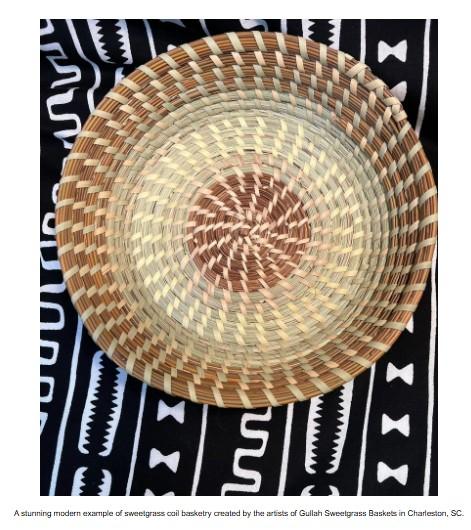 Known as “sweetgrass” to the Gullah Geechee people, blades of Muhlenbergia capillaris were harvested during the growing season to ensure the best pliability, braided and woven carefully together in a coil-like fashion. A similar practice of braiding sweetgrass has been utilized by various First Nations cultures, the importance and spiritual value of this tradition forever lionized in Robin Wall Kimmerer’s best-selling novel and beautiful homage to forgotten indigenous customs, Braiding Sweetgrass. If you’re interested in supporting a woman-owned small business, please check out Gullah Sweetgrass Baskets based out of Charleston, South Carolina. Their handmade sweetgrass baskets are absolutely stunning, backed by over six generations of basket weavers.
All of this backstory for such an unassuming grass! Muhlenbergia capillaris has accrued such a reputation primarily by being in the right place at the right time. Naturally acclimated to marsh edges, coastal grasslands, sand dunes, open woodland edges, and even rocky outcroppings, Muhly grass can grow basically anywhere it finds itself. From rain gardens to salt-prone coastal gardens, Muhlenbergia capillaris provides both ornamental and ecological value to sites suffering from tricky soil. Amazingly, Muhly grass is tolerant of occasional flooding as well as long periods of drought. From the mountainous, rocky edges in the Adirondacks to the sunny, hurricane-prone coasts of Florida, the dry badlands of Texas, and the windswept prairies of Kansas, Muhlenbergia capillaris can be found inhabiting a wide range of territories.
The natural canopy-forming habit of this warm season grass provides shelter for birds, small mammals, and insects, particularly ladybeetles who are voracious predators of unwanted pests. It also provides lovely architectural structure to the back of the perennial border and invokes a sense of wonderment if allowed to naturalize in larger spaces, its misty plumes creating a translucent veil to the landscape beyond. Like its weighted history, laden with rich culture, the ecological and ornamental significance of Muhlenbergia capillaris should be considered invaluable to our desperate and ravished human landscapes. In the words of Robin Wall Kimmerer, “As we work to heal the earth, the earth heals us.” It doesn’t hurt to start by planting native plants.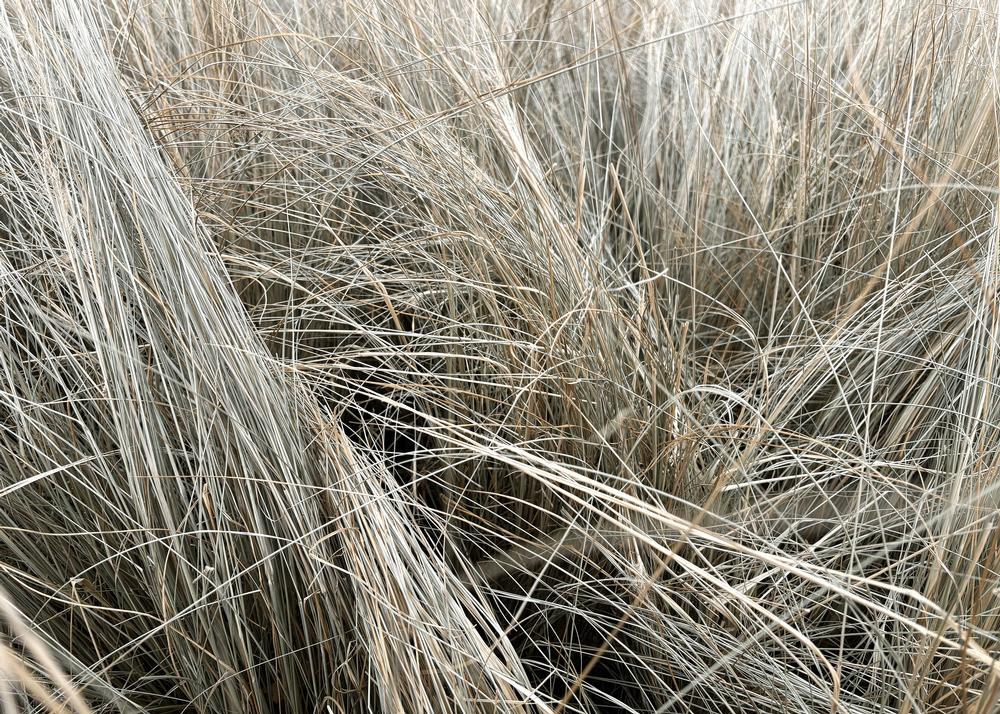 The silvery persistent blades of Muhlenbergia capillaris ‘White Cloud’ above; a field of straight species Muhly grass at Chanticleer in October.


