Castanea dentata
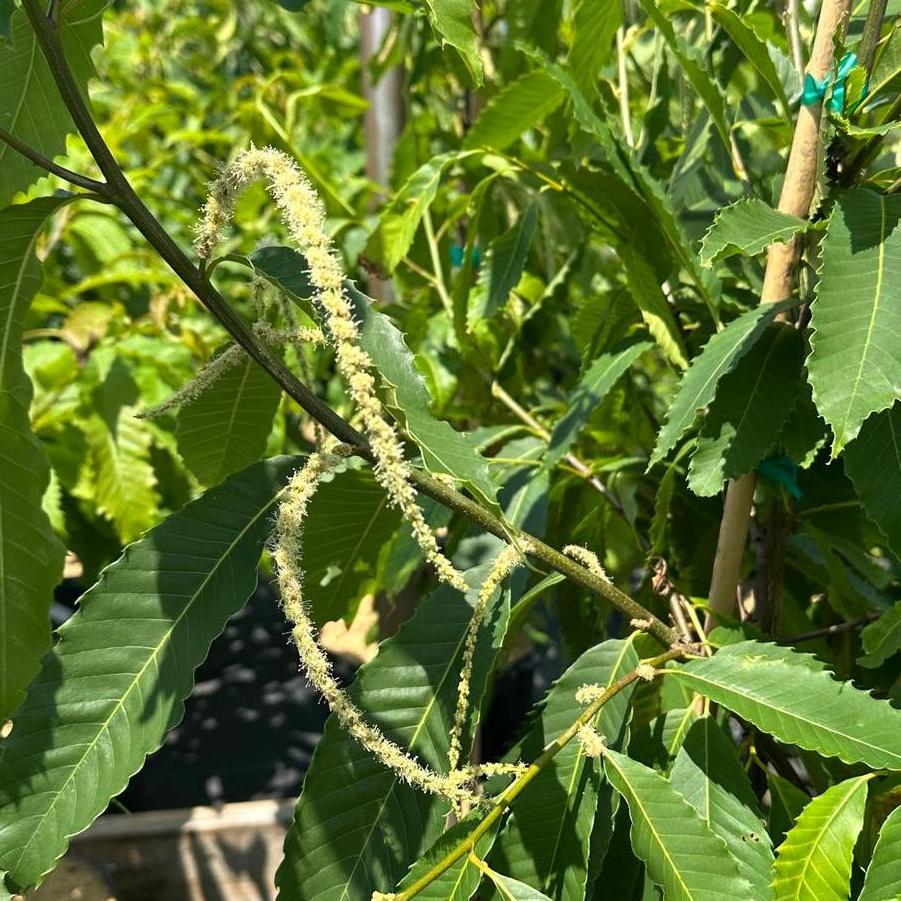
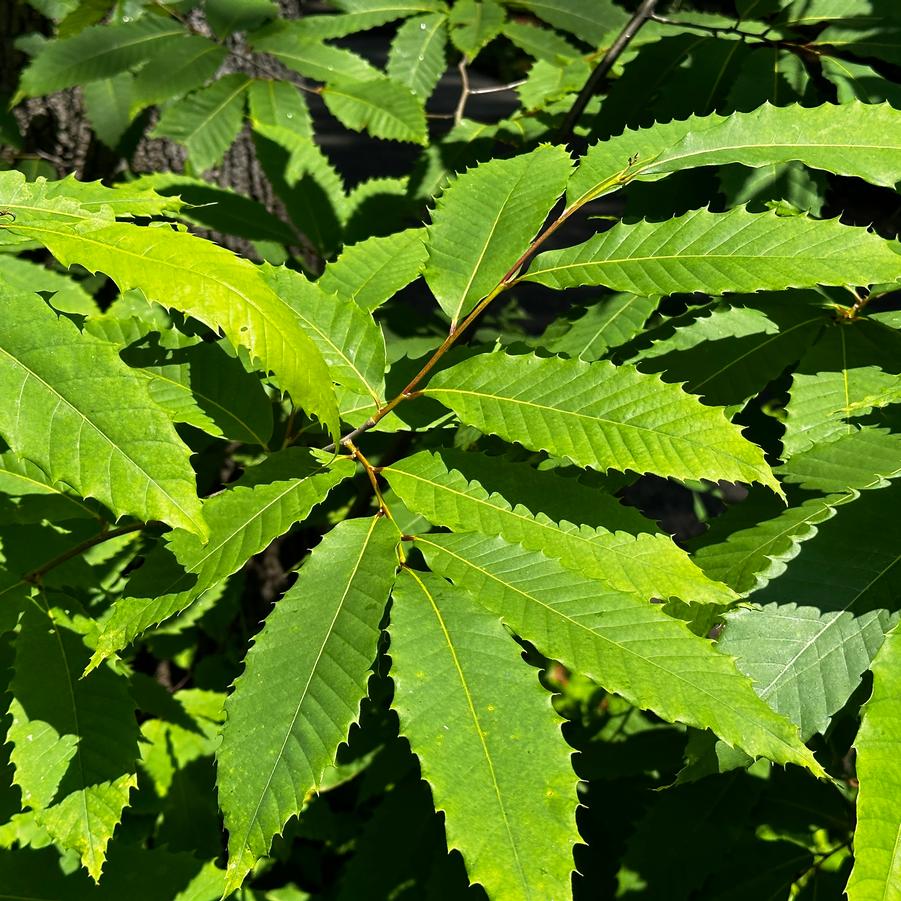
Castanea dentata, a foundational North American tree, is making a comeback in our native landscapes. Seemingly lost to time and the threat of blight throughout much of Eastern North America, our native American Chestnut’s status as a dominant woodland species has greatly diminished. Despite these hardships, Castanea dentata is experiencing a period of redemption, cultivated towards blight resistance and still surviving in our wild landscapes, refusing extinction. American Chestnut is an ecologically important species for its large, edible nuts that are consumed by wildlife of all kinds and have been harvested and eaten by humans for centuries. Economically, Castanea dentata is known for producing sturdy and reliable lumber suitable for carpentry of all levels, from furniture to building materials. Grown in loamy, moist soils prevalent in hardwood forests, Castanea dentata is naturally resistant to the juglone of neighboring Black Walnut trees, and is unpalatable to deer. While we continue to revitalize and restore our natural landscapes, American Chestnut deserves a place amongst its native companions in an attempted renaissance to restore its once royal position as the monarch tree of North America.
- Category:
Woody Ornamentals
- Hardiness Zone: 5
- Height: 60 Feet
- Spread: 60 Feet
- Bloom Color:
White,
Yellow