
April Flowers
With both Earth Day and Arbor Day freshly behind us and the cusp of springtime just ahead (bar the summer-to-winter weather swings we've had lately), it seems like an appropriate time to dive into some of the flowering beauties that bring the season to life.
This week, instead of focusing on resilient hellscape plants, we're gonna take you back to a time of nostalgia, where cottage gardens bloomed with peonies and roses, trellises and espaliers were festooned with wisteria and clematis, and hydrangeas dominated foundation plantings as choice shrubs. With the future as uncertain as it is, it's okay to take a step back in time when things were simpler, colors seemed brighter, birds chirped louder and unlucky insects covered the windshields of our cars driving through cornfields at night.
I’m probably biased towards peonies because of the fluffy pink blooms that graced (and still do grace) my Nana’s garden each May. It’s likely that you have a similar fondness for some garden classic that rarely gets used anymore, replaced instead with ecologically-minded native plants that serve the environment more effectively. That’s not to say that ornamental gems can’t be incorporated into our native plantings. In fact, curated plant communities are often more successful when biodiverse selections intermingle with one another.
Bright, full-bodied peonies initially attract pollinators, who then happily visit co-blooming perennials such as Anemone canandensis, Geranium maculatum, and Phlox subulata, just to name a few. Intermixing native species alongside non-problematic alien species provides not only aesthetic and visual cohesion, but proper layers necessary for biodiverse gardens intended to attract pollinators and wildlife.
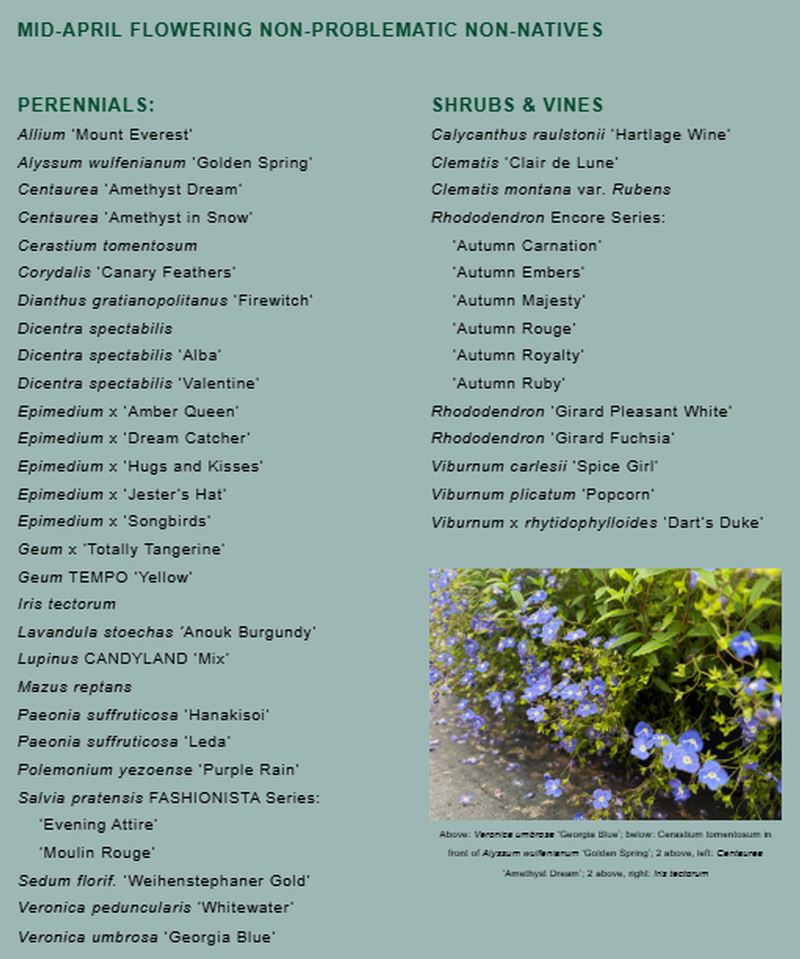
Below are several lists - two of currently flowering native species, and the others of currently flowering non-native species that perfectly complement their indigenous counterparts. (Please note this is definitely not an exhaustive list!)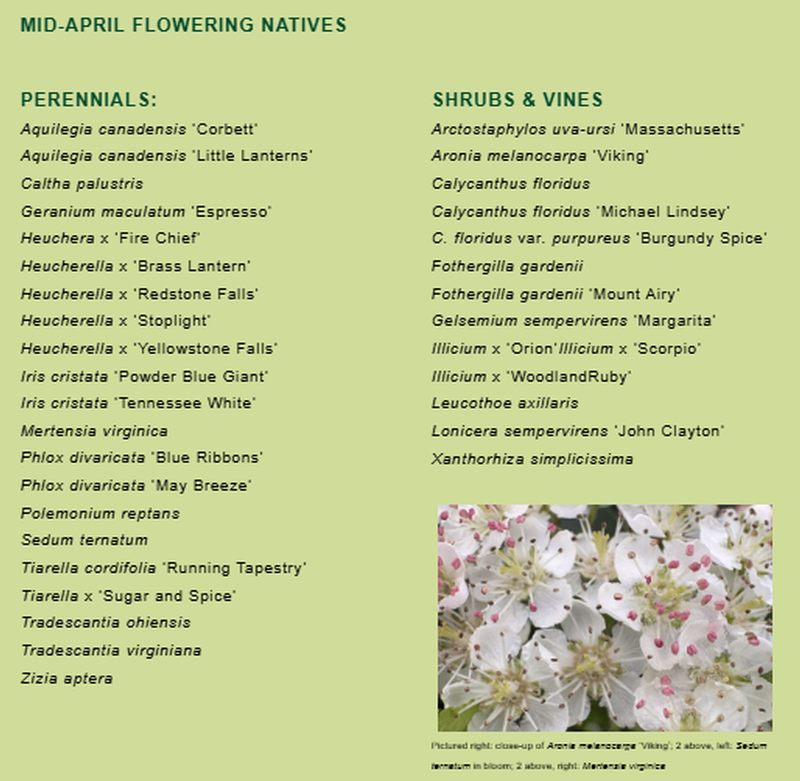

Geranium maculatum Espresso