

Just Joe-Pye Things
You can't spell "August" without "Joe-Pye weed"
... Okay, maybe you can, but it sure feels like the plant of the month. Like Rudbeckia hirta, it seems our strange weather patterns have been a benefit for our wild Eutrochium (syn. Eupatorium) species. From disturbed roadsides to low maintenance meadows and coastal dunes, Joe-Pye weed has made a summer stage for itself throughout the Eastern corridor and well beyond into Midwestern prairies and Southeastern bogs.

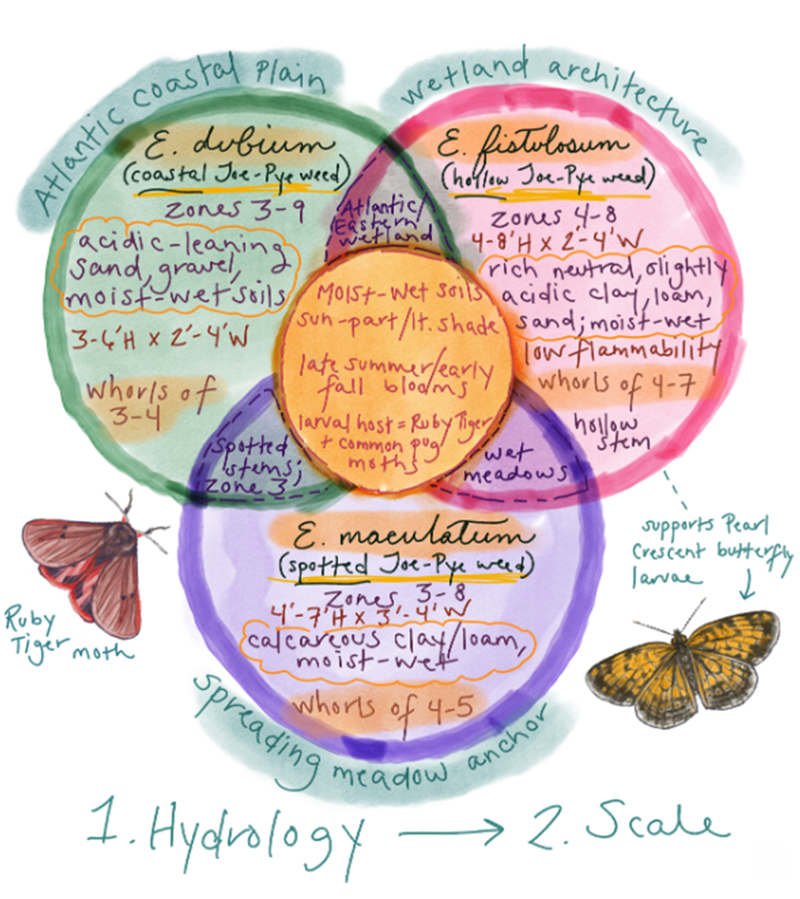
If you’ve ever been confused over the differences and similarities of our native Joe-pye weeds, you’re not alone - many of us suffer from Joe-pye blindness, even some of the most nuanced native plant enthusiasts. Today’s the day we crack open the Venn Diagram of Joe-Pyes, or at the very least, the three native species that are most commonly found in the trade.
Let’s break it down:
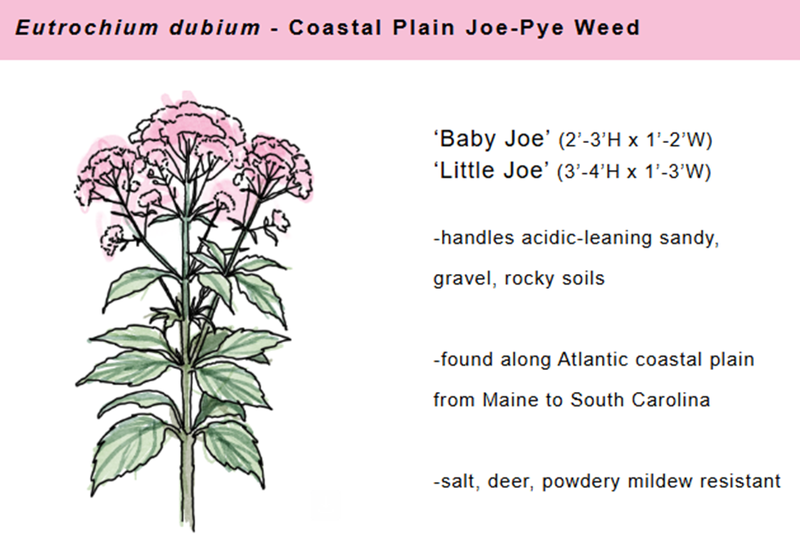
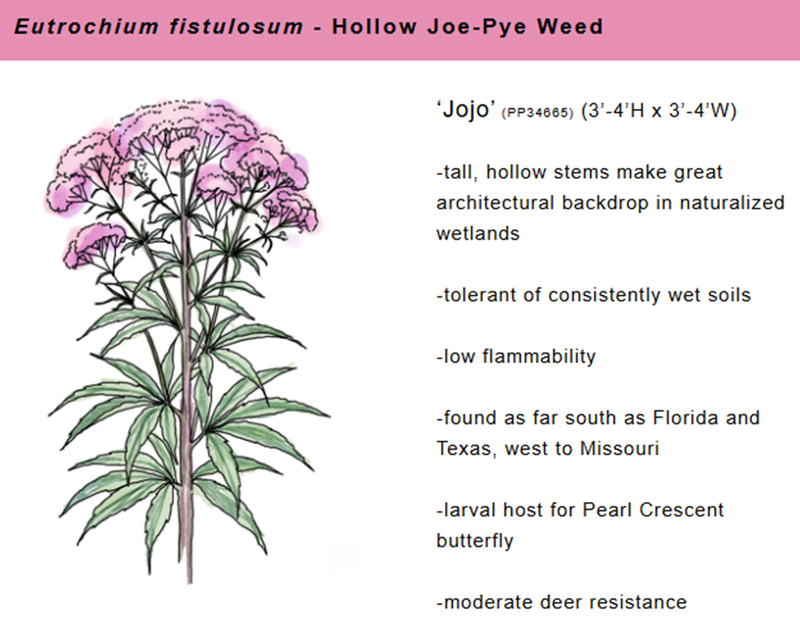
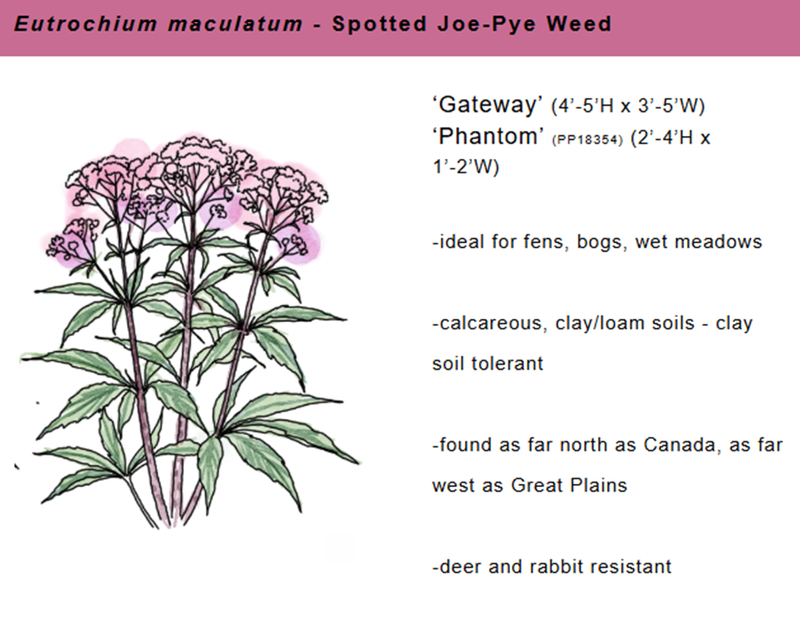 Shared Eutrochium Characteristics
- Prefer moist-wet soils
- Full sun to partial/light shade
- Larval hosts for Ruby Tiger & Common Pug moths
- Stems useful to overwintering insects
- Seedheads used for food and bird habitat
- Typically, deer resistant
- Named after Indian American medicine man, Joe Pye, who used the plant to treat fevers and similar maladies.

 See all our Perennials