

Well, Hot Damselfly!
It's been a few weeks that I've wanted to write about the mysteries of dragonflies and damselflies, but I've held off for the "right moment", whatever that means.
Well, right at the end of pollinator week, this seemed to be it. Dancing around our namesake pond, fairylike wings glittering in the late morning sunlight, dragons and damsels can be found hunting with both an urgency and a playfulness unlike most other insects. Although not intentional pollinators, dragons and damsels occasionally transfer pollen from plant to plant by way of their natural movement: flitting serendipitously from leaf to leaf on the prowl for a meal.
You may remember from our 2026 supplement that our very own resident Purple Martins are huge fans of dragon and damselflies - crunchy, flying meals on the go. In turn, dragonflies and damselflies are voracious predators of gnats, mosquitos, and flies.
Here’s a refresher if you don’t have the catalog handy:
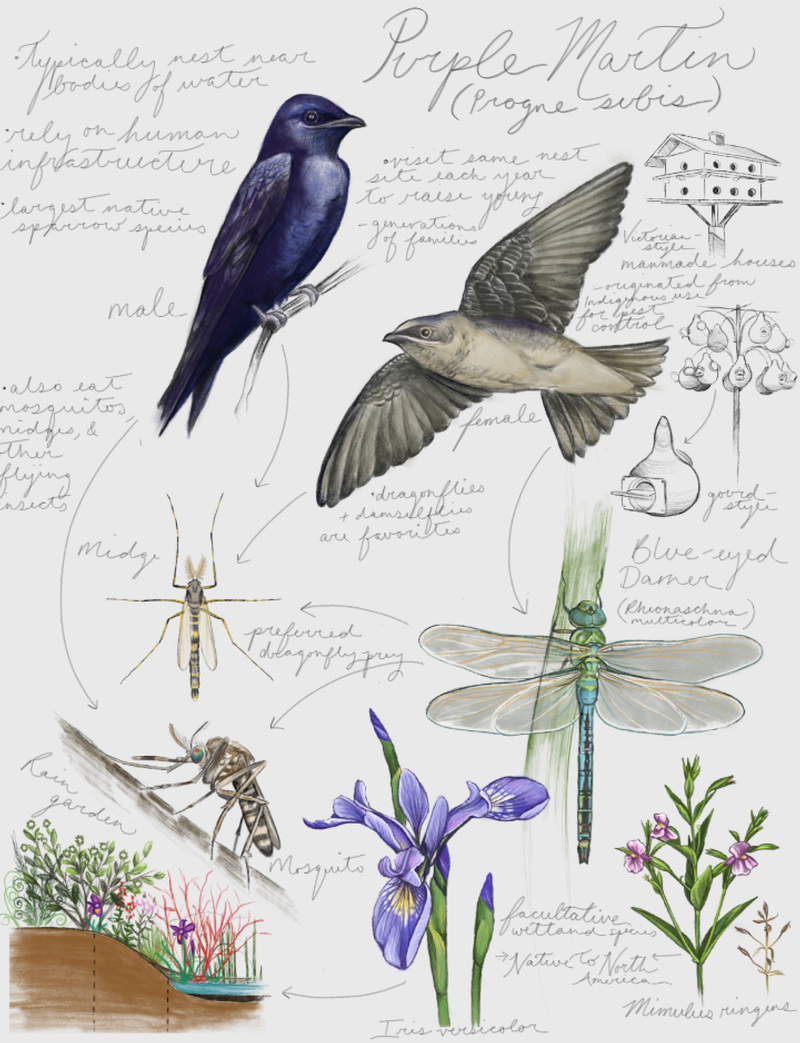
We talk about resiliency in the plant world, but parts of the insect realm that rely upon the success of our natural spaces have been remarkably resilient in their own right. Dragons and damsels, although prehistoric and once the largest insect in the animal kingdom boasting the size of modern ravens, are known to require suitable water sources to reproduce - ya know, bodies of water that haven’t been pumped full of runoff from fertilizers, pesticides, herbicides, or whatever other chemical concoction our human brains have crafted. Despite their ancient lineage, and resiliency through seemingly impossible natural catastrophes, their success is just as dependent on the availability of necessary resources that provide shelter, grounds for hunting, and protection for offspring.
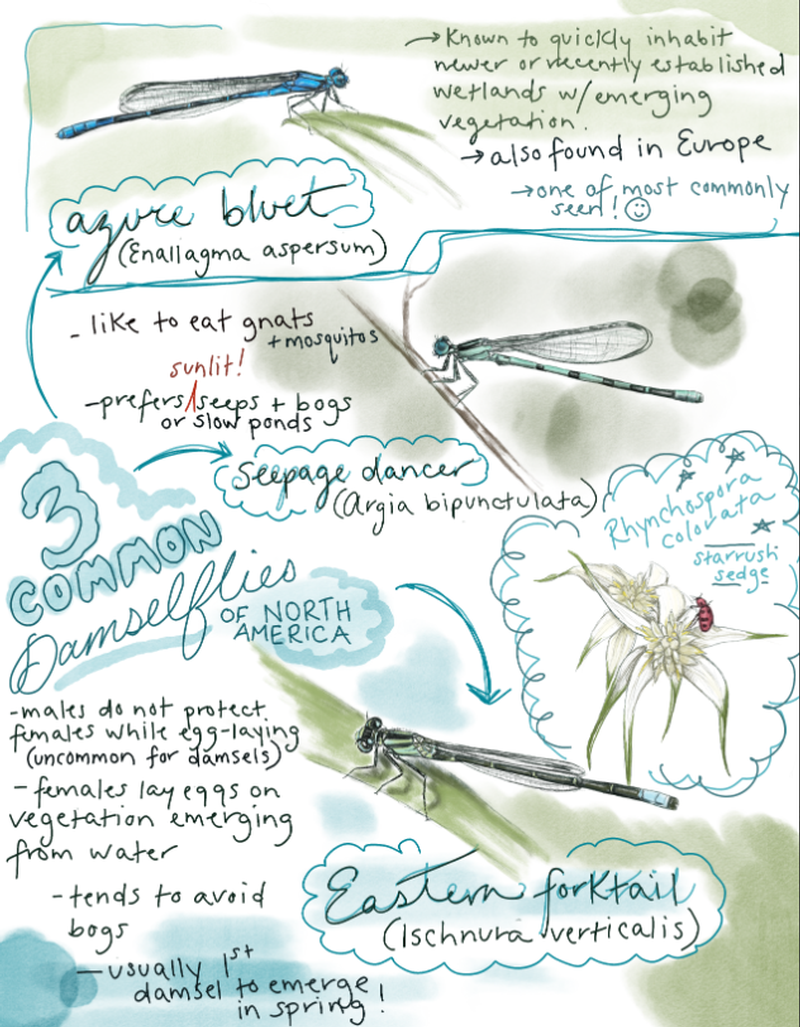
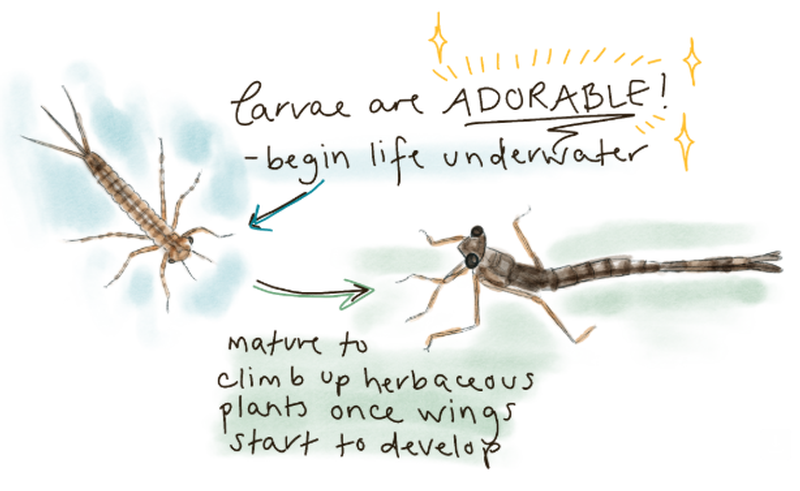
It seems like dragonflies usually experience pretty privilege the most of the two, but damselflies are a special kind of creature that deserve more notoriety than they typically get. Identifiable by their characteristic upright wing position when at rest, damselflies often inhabit the same wetland environments as their larger, flashier counterparts. Their small size and ability to seemingly blend in with their surroundings makes them difficult to track, and when seen from afar or when caught in just the right ray of sunlight, it can be easy to understand why our predecessors might have thought fairies to be real.
Preferring slender, strappy foliage to retire upon, damsels can often be found inhabiting edges of clean streams, creeks, and ponds resting on arching blades of sedges, rushes, grasses, and irises, occasionally opting for a buttonbush leaf if the mood strikes.
While planting for existing bodies of water is important, thinking ahead towards powerful storms, flash floods, and poorly draining areas that may be doomed for constant inundation in a future likely impacted by increasing water levels, is potentially more critical than ever. Not only does planting flood tolerant, wet-soil-friendly selections help to retain soil health and reduce overall impact of potentially harmful storm damage in low-lying, floodprone regions, but it promises habitat for some of the oldest and most beneficial flying insects worldwide.
Below is a list of plants that are particularly helpful for damsels and dragonflies. Those bolded are strappy, slender-leafed selections perfect for planting near ponds, bogs, and streams.
- Acorus americanus | American sweet flag | (43) #1’s available
- Boltonia asteroides | false aster | (115) #1’s available
- Caltha palustris | marsh marigold | (602) #1’s available
- Carex grayi | grey sedge | (59) #1’s available
- Cephalanthus occidentalis | buttonbush | (600+) different cultivars available
- Clethra alnifolia | summersweet | (800+) different cultivars available
- Cornus sericea | redtwig dogwood | (50+) different cultivars available
- Equisetum hyemale | horsetail | (538) #1’s available
- Eupatorium maculatum | spotted Joe-pye | (800+) different cvs. available
- Eupatorium perfoliatum | boneset | (64) #1’s available
- Hibiscus coccineus | swamp hibiscus | (57) #2’s available
- Iris fulva | copper iris | (92) #1’s available
- Iris versicolor | blue flag iris | (1,400+) #1’s & Qts available
- Juncus effusus | (141) #1’s available + (116) ‘Big Twister’ #1’s
- Mimulus ringens | Allegheny monkeyflower | (206) #1’s available
- Rhexia virginica | Virginia meadow beauty | (504) #1’s available
- Rhododendron viscosum | swamp azalea | (30+) different cultivars available
- Rhynchospora colorata | starrush sedge | (341) #1’s available
- Rosa palustris | swamp rose | (244) #3’s available
- Salix discolor | pussy willow | (9) #10’s available
- Scirpus cyperinus | wool grass | (25) #1’s available
